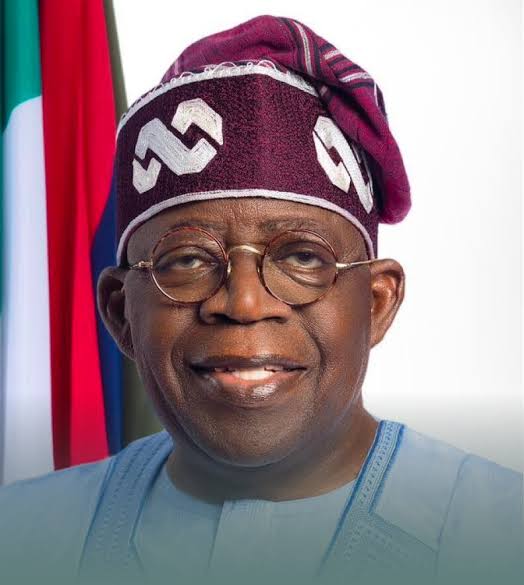
“Look Beyond His Past”: Prof. Muoboghare Defends Tinubu, Says Background Should Not Define His Leadership
Prof. Patrick Muoboghare has urged Nigerians to look beyond the controversies surrounding President Bola Ahmed Tinubu’s educational, family and early-life background, arguing that such issues should not be used to diminish his achievements in politics and governance.
Muoboghare said that even if some of the claims and controversies surrounding Tinubu’s childhood, schooling, name, parentage and place of origin were accepted, they would not erase what he described as the President’s significant accomplishments in public service.
According to him, various accounts have portrayed Tinubu as someone who experienced severe hardship early in life, including claims that he did not attend primary or secondary school and that he later moved to Lagos, where he was taken in by another family.
“I agree with you,” Muoboghare said, stressing that even an unfortunate or difficult background should not become the basis for dismissing a person’s subsequent achievements.
He argued that Tinubu’s journey from what critics describe as an impoverished and uncertain background to becoming a professional accountant, politician, senator, governor and ultimately President of Nigeria represents an extraordinary story of resilience and determination.
Muoboghare maintained that Tinubu’s political and administrative record, particularly his tenure as governor of Lagos State, should be evaluated on its merits rather than through controversies surrounding his early life.
He described Tinubu as one of the most courageous political figures Nigeria has produced, noting his ability to build a formidable political structure and maintain influence beyond his tenure as governor.
The professor also placed Tinubu among Nigeria’s most influential political leaders, mentioning him alongside Chief Obafemi Awolowo and Sir Ahmadu Bello. He credited the President with building and sustaining a strong political network in Lagos and beyond, as well as maintaining a loyal team that has remained influential within the country’s political landscape.
Drawing from biblical history, Muoboghare likened Tinubu’s emergence to the story of David, who, despite appearing unlikely to become a great leader, was eventually chosen for significant responsibility.
He argued that people should not underestimate what someone from difficult circumstances can achieve, stressing that individuals can rise from seemingly insignificant backgrounds to accomplish what others consider impossible.
Tinubu’s Economic Reforms
Muoboghare also defended some of the major economic decisions taken by the Tinubu administration, particularly the removal of fuel subsidy and reforms to the foreign-exchange system.
He described the decisions as politically difficult but necessary steps aimed at addressing longstanding structural problems in the Nigerian economy.
According to him, the reforms have also increased revenues available to the federal, state and local governments, giving many states greater capacity to manage their debts and meet their financial obligations.
He therefore urged Nigerians to assess the administration beyond the immediate difficulties associated with economic reforms and consider their broader objectives and effects.
On Security and State Police
Muoboghare further called for stronger measures to tackle insecurity across the country and expressed support for the establishment of state police.
He argued that local security structures could be more responsive and accountable to the communities they serve, particularly in addressing security challenges that require knowledge of local circumstances.
He also dismissed the argument that the administration’s performance should be judged primarily through the religious composition of the presidency, particularly the Muslim-Muslim ticket.
According to him, Nigerians should be more concerned about governance, economic development and security than whether a Christian or Muslim pairing occupies the presidency.
“I Will Still Support Tinubu”
Muoboghare concluded that Tinubu’s background, whether as portrayed by his critics or otherwise, should not determine how Nigerians assess his presidency.
He said he remained convinced that Tinubu deserved his support and that criticisms surrounding the President’s childhood, education, family background or origins would not change his decision to vote for and campaign for him.
For Muoboghare, Tinubu’s journey from adversity to the highest political office in Nigeria is ultimately a story of resilience, political determination and what he described as divine intervention.
About The Author