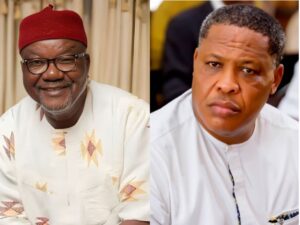
2027 AND THE IRONY OF CHINEDUM ORJI’S POLITICAL REBRANDING
It is a profound insult to the collective intelligence of the people of Abia State, particularly residents of Ikwuano/Umuahia Federal Constituency, for political figures associated with the state’s years of stagnation to lecture the public on “development” versus “deception.” Genuine redemption begins with accountability for past stewardship, not a hurried public relations campaign designed to regain political relevance ahead of the 2027 elections.
The irony in the emerging narrative that Chinedum Orji, popularly known as Ikuku, intends to “replace political deception with development” is simply glaring. For a politician who played a prominent role in the political establishment during a period many Abians associate with underdevelopment, invoking the language of deception without addressing the past raises serious questions about political memory and accountability.
Indeed, one of the greatest forms of political deception is the attempt to repackage familiar political actors as fresh messiahs of change without first accounting for their records in public office. Yet, this appears to be the strategy behind the narrative promoted by proxy groups such as the Mandate Group, which seems more interested in selling a new political image than confronting legitimate questions about past governance. Ndi Ikwuano/Umuahia deserve better than to be treated as an electorate with a short memory.
When the Mandate Group speaks boldly about “development,” it must also be prepared to confront the infrastructural deficits, deteriorating roads, pension concerns and broader economic challenges that characterised the years of the previous administration, during which Chinedum Orji served as Speaker of the Abia State House of Assembly. His tenure in that position makes scrutiny of his political record entirely legitimate. No amount of media publicity can erase the public’s right to demand explanations about the performance of the political establishment he helped lead.
As 2027 approaches, the attempt to construct a political redemption story around figures associated with the old order is a hard sell to an electorate that has become increasingly conscious of its power and expectations. Political rebranding cannot substitute for accountability, and slogans cannot replace a credible record of service. Those seeking renewed public trust must demonstrate what they did with the opportunities and responsibilities they previously held.
Ultimately, Ndi Ikwuano/Umuahia deserve genuine representation anchored on transparency, measurable achievements, accountability and a clear commitment to the constituency’s development. These are the principles that underpin the performance and mandate of Rt. Hon. Obi Aguocha’s 4+4 agenda. The 2027 election should therefore be about consolidating credible representation and delivering tangible results, not recycling political rhetoric or allowing familiar political interests to disguise themselves as agents of a new beginning.
The message is simple: Abia cannot afford to confuse political rebranding with genuine transformation. Before anyone promises to replace deception with development, the people have every right to ask what that person did when entrusted with the opportunity to serve.
About The Author